ExperiencesLive event
Berkie at Navigate.
Taking Berkie live in front of a room of digital policy leaders, and turning what went wrong into the next release.
Back to all work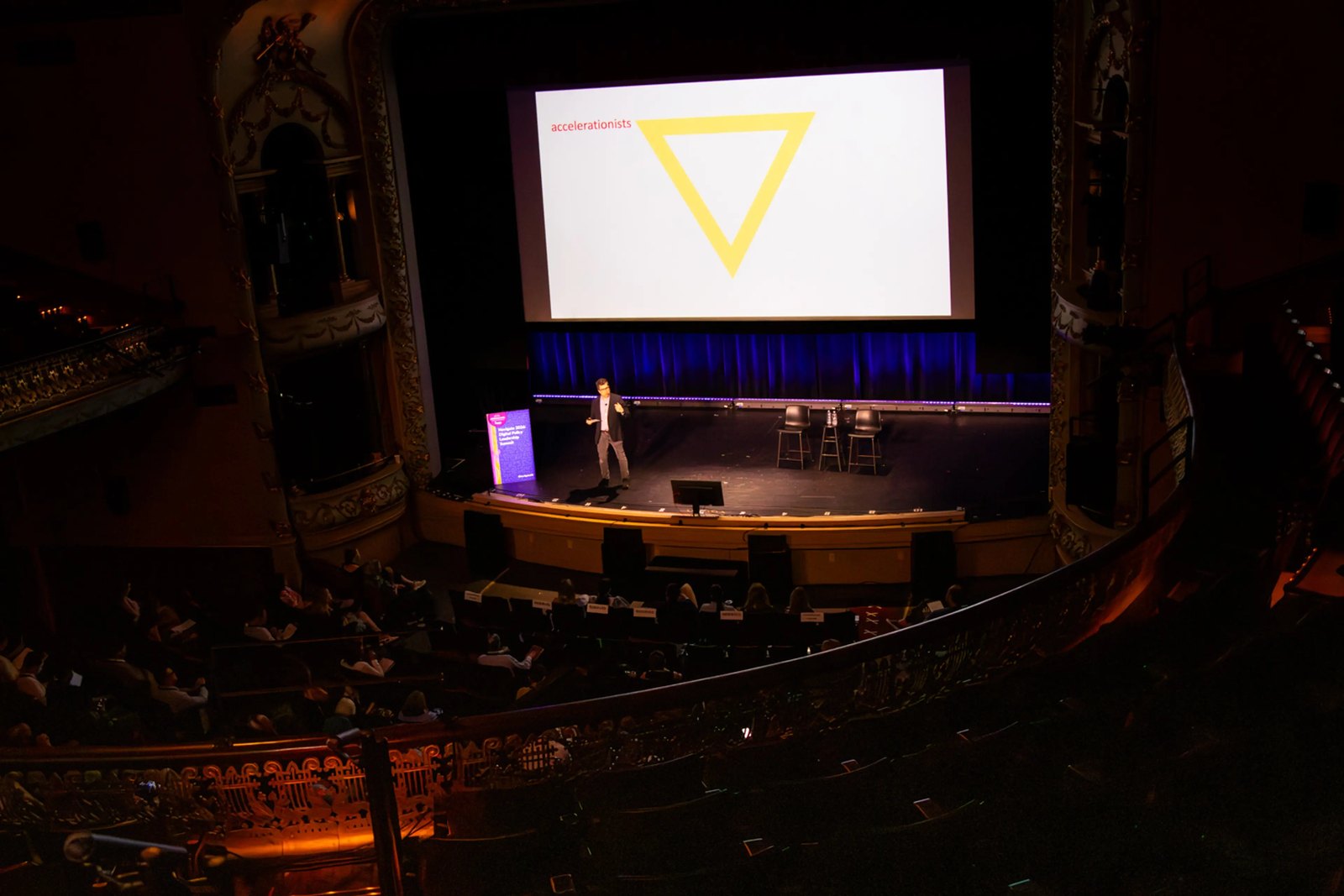
- Role
- Product lead; ran NextSpace live from the room
- In the room
- 71 of 80 breakout participants active, 64 on their phones
- Event
- Navigate Digital Policy Leadership Summit, co-hosted by BKC and IAPP
- Where
- The Music Hall, Portsmouth, New Hampshire
- When
- June 24 and 25, 2026
The moment
A product is only real once it survives a real room.
Berkie ran live at two sessions: a breakout on making big policy decisions under time pressure, with panelists from industry, government, and academia, and the summit’s closing keynote. That meant an 800-seat auditorium, a moderator who might prompt Berkie from the stage at any moment, and no second take.
How I ran it
- 01A direct line to the moderatorWorking directly with the moderator, with no relay through a third person, meant nothing got lost in translation about what the event needed or what he wanted to check on in the moment.
- 02Two laptops and a phoneOne laptop cast to the big screen, moving between slides and NextSpace. A second watched the platform itself, so I knew when to switch the screen and could nudge the conversation during lulls without the audience seeing. A phone kept me connected to the engineers.
- 03Let the room inAttendees joined by QR code under pseudonyms, asked Berkie questions privately, and talked with each other in the group chat, while I surfaced their questions to the panel on screen.
- 04Close the keynoteAt the closing keynote, Berkie wrapped the summit with a thank-you to the speakers and the IAPP team, written live from the room’s own conversation.
What the data showed
Engagement was real, not passive viewing
In the breakout, 71 of 80 pseudonymous participants were active, with 22 private conversations with Berkie and 29 group chat messages. Almost everyone joined from a phone.
- All the energy in one window42 of the event’s 77 messages arrived in a single 28-minute stretch, six times the session’s average, when the room started debating AI, apparent sentience, and trust. The chat was nearly silent before and after.
- A real intellectual challengeOne attendee went 15 rounds with Berkie, pressing on whether “the law lags behind technology” is a genuine gap or an excuse for not complying with laws that already apply. Berkie held the distinction the whole way.
- Live on stageThe moderator prompted Berkie from the stage to find a paper a panelist mentioned, and it found the right one. When someone asked Berkie to recap the questions asked so far, it got them right.
- An unscripted answer about valuesAsked whether it was built on values, Berkie explained its design principles, psychological safety, cognitive accessibility, agency, and structured participation, without being scripted to. It’s now a data point for the Personality Lab’s work on self-representation honesty.
What I fixed afterward
Every friction point became a ticket
I wrote up what worked and what didn’t the same week, and turned the friction into the roadmap.
- Presentation modeText was too small on the big screen, and the moderator asked for it to be bigger mid-session. That became presentation mode: larger type and a reliable full-screen view.
- A venue tech checklistA casting fix found in the tech test didn’t carry over to the live event, so now there’s a pre-event checklist for venue A/V teams.
- Post-session recapsSeveral attendees asked Berkie whether a summary would be sent afterward, and it couldn’t say. That real, repeated need fed directly into post-event follow-up.
- Voice trigger and latency“Hey Berkie” was missed more than once, and some pauses ran long. Both went to engineering as performance issues, separate from the story of what worked.
- An event runbookThe two-laptops-and-a-phone setup, documented so anyone can run a NextSpace event without reinventing it.
No second take.
What it proved
Navigate was NextSpace’s first major external proof point: the platform and Berkie working live at conference scale, with a room that engaged instead of just watching. The energy in the room was noticeably different, less stagnant and more enthusiastic.
It also opened doors. Attendees and a speaker followed up about using NextSpace in their own classes and programs.